
Weber County Obituary Records
Weber County obituary research works best when you start in Ogden and then widen the search in a calm, steady order. The county has a strong public record trail, a long history, and a health department that handles certified death copies for the region. That means a name can move from a short notice to a burial clue, then to an official certificate without losing its place. The best first pass usually includes the county clerk, the county library, and the Weber-Morgan Health Department. Each one answers a different part of the same question.
Weber County Quick Facts
Weber County Obituary Sources
The county clerk and auditor page is a useful first stop when a Weber County obituary search needs a local record anchor. The Weber County Clerk/Auditor page helps tie a family name to the county seat in Ogden, which matters when an obituary uses a married name, a maiden name, or only a short household reference. That office is not the death-certificate office, but it still helps you keep the search grounded in the right county before you branch out to burial and newspaper sources.
The image below comes from the Weber County Clerk/Auditor page, which is the county record anchor many Ogden-area obituary searches start with.
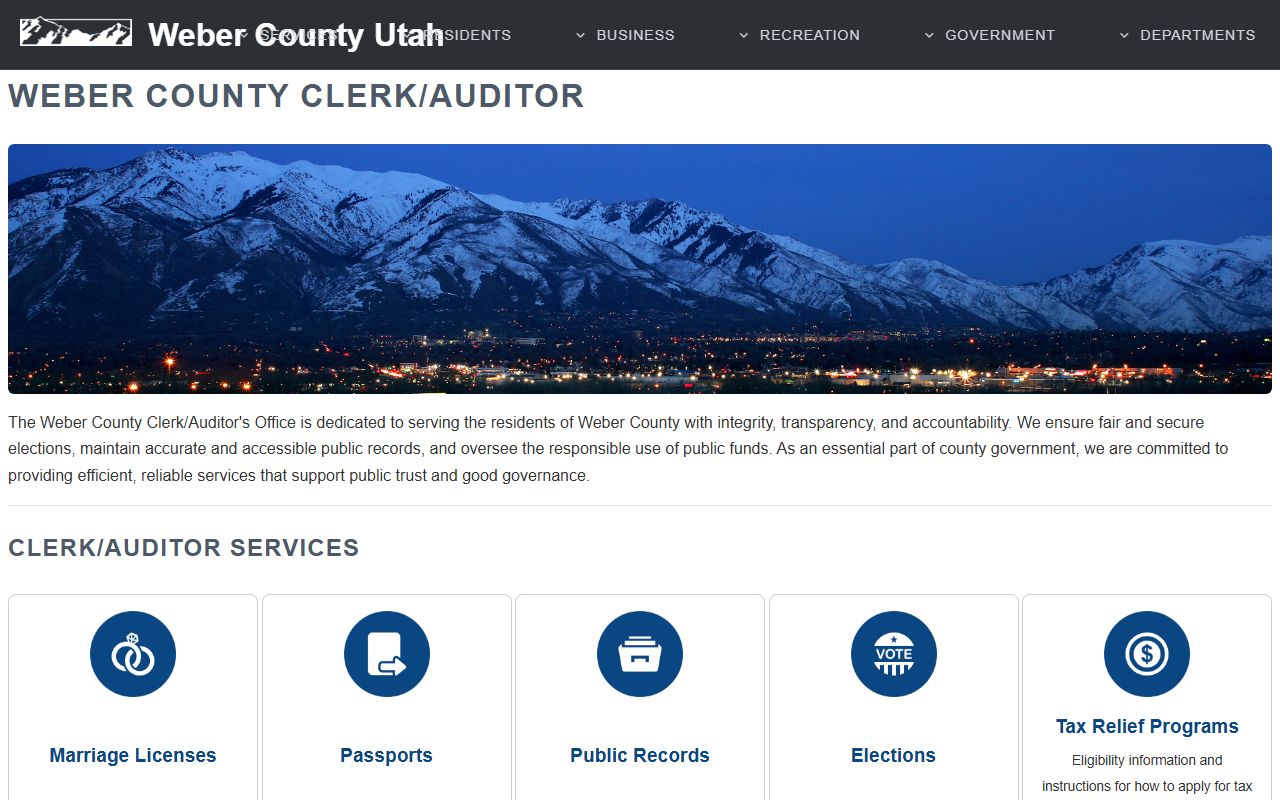
That clerk page is useful when a notice gives you a family line but not the exact filing source. It gives the search a place to begin before you move to the health office or the archives.
The Weber-Morgan Health Department is the county's death-certificate path. Visit Weber-Morgan Health Department vital records when you need a certified copy or a request path for a Utah death. The Ogden office serves Weber County residents through in-person, mail, and online ordering, and the office hours run Monday through Friday from 8:00 AM to 5:00 PM. That makes it a practical office for both recent deaths and older family files.
Weber County Obituary Archives
Older Weber County obituary work usually depends on the burial side of the trail. The Utah Cemetery and Burial Database is valuable because it can turn a name into a cemetery match, a burial date, or a family connection. That is especially helpful in a county with deep settlement history, where the obituary may be short but the burial record still carries the detail you need. A grave location or cemetery name can make the rest of the search much easier.
The image below comes from the Weber-Morgan Health Department vital records page, which shows the Ogden office families use when they need certified death records.
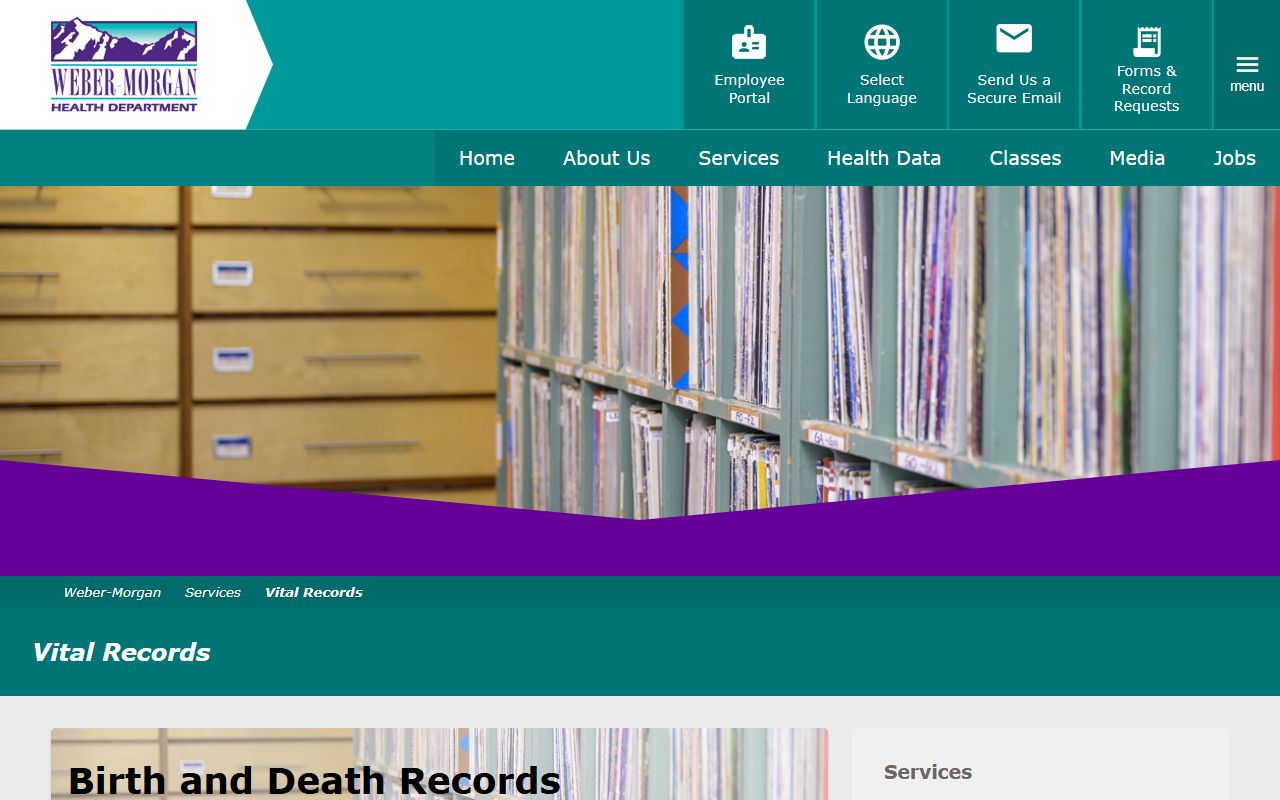
That office matters because it links the county search to the official certificate path. It also gives you a clear place to ask for current instructions before you request anything by mail.
The Utah State Archives death certificate index at archives.utah.gov/research/indexes/20842.htm helps with older or uncertain death dates. It covers Utah death records from 1905 through 1967 and lets you check a name, year, and county before you order. For printed notices, Utah Digital Newspapers can surface death notices, funeral notices, and short obituary items that never reach a county file.
Note: The burial database and the archive index are strongest when you already have a rough year or a cemetery clue.
Finding Weber County Obituaries
The Weber County Library system is one of the best local tools for obituary work in the county. Its local history collections, newspapers, and genealogy resources give you a place to verify spellings and compare family names before you order a copy. The library is especially useful when a Weber County obituary shows up in more than one form, because a directory or newspaper clipping may show a detail that the death record leaves out.
The image below comes from the Weber County Library page, which is the county research hub that often fills the gap between a notice and a certified record.

That library source matters because Ogden sits at the center of the county and a lot of family history work runs through the same local books, microfilm, and databases. The library can be the quickest way to move from a rough name to a usable search trail.
To keep a Weber County obituary search tight, gather the basics first.
- Full name of the deceased, including maiden names if needed
- Approximate death year or burial year
- Town, ward, or cemetery clue in Weber County
- Spouse, parent, or child names that can separate similar people
Those details make the newspaper search more precise and help when you compare the obituary to the burial record and the certificate record.
Public Access for Weber County Obituaries
Weber County obituary work is shaped by Utah public-record rules, especially GRAMA. In practice, that means many government records are open to the public, but some pieces can still be protected, private, or redacted. A newspaper obituary may be public, a burial record may be public, and a certificate copy may require a tighter request path. The rule is simple, but the record trail can still split across offices.
The state office at Utah Office of Vital Records is the backup when Weber-Morgan Health is not the right source or when a statewide request makes more sense. Utah also points researchers to the federal guidance on the CDC Utah vital records page, which confirms the state contact and the basic request framework for Utah records. That can help when you are checking an address or a request method before you order.
Most Weber County searches work best when you start with a public notice, then move to the official record. That keeps the search efficient and avoids ordering the wrong file.
Getting Weber County Obituary Copies
If you need a certified death record rather than a notice, Weber-Morgan Health is the main Weber County path. Requests can be made in person, by mail, or online through the state's SILVER system. The department asks for proper ID and proof of relationship when needed, which keeps the file tied to the right person. That is especially important when the obituary is a partial match or when the family needs a copy for a formal paper trail.
Mail requests are straightforward if you keep them plain. Send the completed form, a clear ID copy, proof of relationship if it applies, and payment by check or money order. If you are trying to match a death notice to a certified file, start with the exact name used in the obituary, then add the city or county if the search needs more focus. A clean request saves time on both sides.
For older Weber County cases, the county clerk and the burial database work together more often than people expect. A marriage record can confirm the family line, while the death index and burial record show the later event. That makes the obituary search more solid because each record supports the next one.
Note: Bring the smallest set of facts that still identifies the person. Simple requests are easier to process.
More Weber County Research Help
Weber County has enough local and state support to make obituary work practical even when the first search comes up short. Ogden is the county seat, so the record trail is compact. That helps when a family needs to move from a name to a certificate without jumping across Utah. The clerk, health department, library, and burial database all serve different parts of that trail.
If the first pass does not settle the question, search the newspaper again with a different year range and then check the burial side one more time. The result often appears after the second or third pass, not the first. That is normal for obituary work, especially when a name is common or the notice was brief. Weber County records are good enough to support that kind of careful search.
The county library image below comes from the Weber County Library page, which is the local research source most likely to help when a notice turns into a full family history question.
The library collections can turn one name into a useful record trail. That is often the difference between a vague notice and a usable family result.