
Washington County Obituary Records
Washington County obituary research works best when you begin in St. George and then follow the county trail in a steady order. The county has a long record history, a clear county seat, and a health department that handles certified death copies for the region. That means a name can move from a short notice to a burial clue, then to an official certificate without losing its place. The first pass usually works best when you pair a name with a year, a place, and one local office. That keeps the search from drifting and makes the next record easier to trust.
Washington County Quick Facts
Washington County Obituary Sources
The image below comes from the Washington County Clerk, which is the first county office many obituary searches use when a family name needs a local anchor. The clerk office keeps marriage records from 1887 forward, and those records can help sort out a married name, a maiden name, or a family line that is hard to track in a short notice.
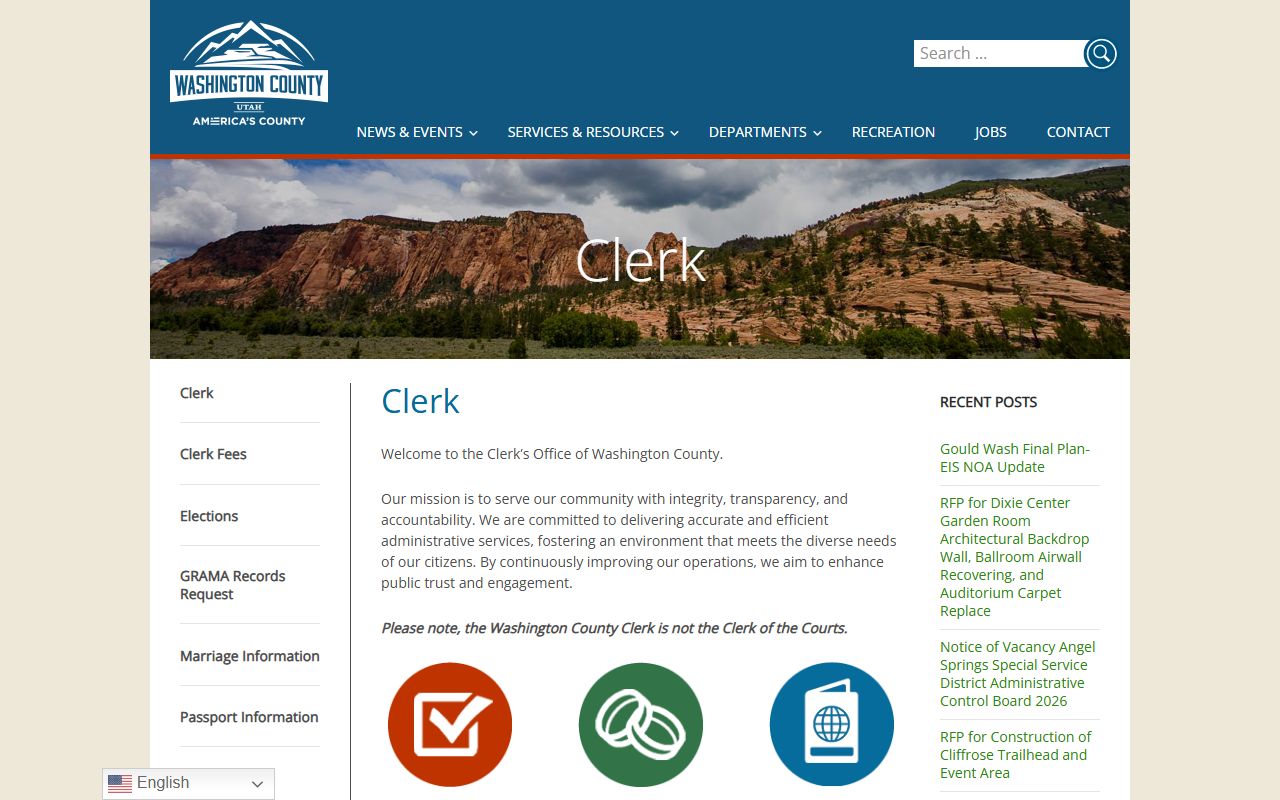
That clerk page matters because the county seat is St. George and the record trail often starts there. If the obituary uses only a partial household name, the clerk can still give the search a clean place to begin. The county office does not replace the death certificate path, but it helps keep the family line in focus while you move through the rest of the county records.
The Southwest Utah Public Health Department is the county's death certificate path. Visit the county health pages at swuhealth.gov and swuhealth.gov/clinical-services when you need a certified copy or a request path for a Utah death. The St. George office is at 620 S 400 E, St. George, UT 84770, and the phone number is 435-673-3528. That makes it a practical office for both recent deaths and older family files.
Washington County's records are useful because the same name can show up in a newspaper, a clerk file, and a health department request. When those pieces line up, the obituary search becomes much easier to trust.
Washington County Obituary Records
The image below comes from the Washington County Recorder, which is the county source most likely to help when an obituary points to land, property, or an estate question. The recorder keeps real property records, and those files can show how a family settled land after a death or where a home passed to the next generation.
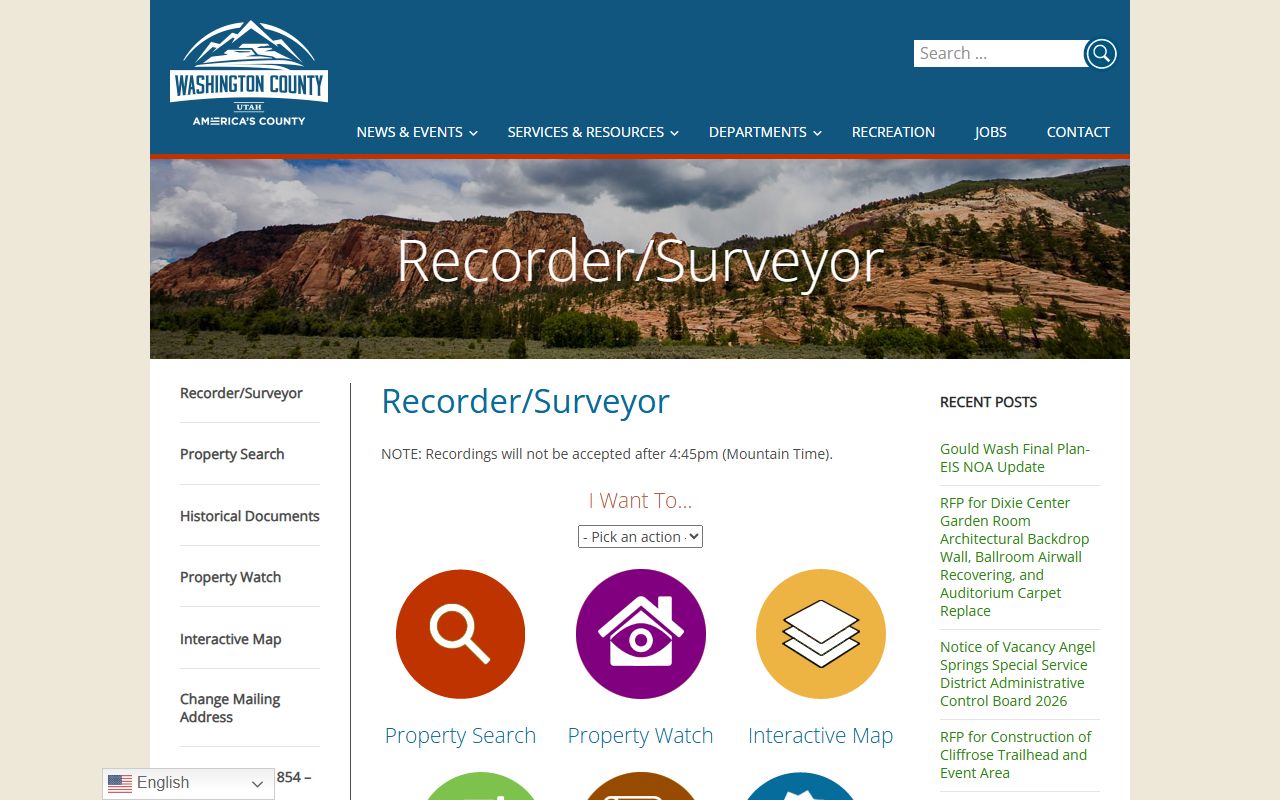
That recorder page is not a death office, but it is still valuable when an obituary mentions a home, a parcel, or a burial plot. A deed or transfer can help explain what happened after the notice ran. It can also connect a name to a place when the obituary gives only a street or a neighborhood clue.
Older Washington County obituary work often depends on the state archive trail. The Utah State Archives death certificate index at archives.utah.gov/research/indexes/20842.htm covers Utah death records from 1905 through 1967 and lets you search by name, county, and year. That is useful when a family story is fuzzy or when the notice is too short to settle the date on its own.
For records that predate or sit beside the certificate trail, the county archive and the state history tools help close the gap. They give you the framework for older family searches without forcing you to guess at the person or the year.
Finding Washington County Obituaries
The image below comes from the Southwest Utah Public Health Department, which is the county health source families use when they need a certified death record and want to stay within the Washington County record path. The office is also a strong reminder that obituary work and certificate work are closely tied in southern Utah.

That office matters because it links the county search to the official certificate path. It also gives you a clear place to ask about current request steps before you mail anything or drive to the office. The county health office is often the best first stop when a family needs proof of death for a formal record or a later legal step.
Newspaper searches are just as important. Utah Digital Newspapers at digitalnewspapers.org can surface death notices, funeral notices, and short obituary items from Utah papers. A newspaper clipping can carry the church name, the funeral home, or the burial place. That extra line may be the clue that gets the search unstuck.
The Utah Cemetery and Burial Database at utahdcc.secure.force.com/burials is another strong fit because it can turn a name into a cemetery match. That is useful in Washington County, where a burial record may be more detailed than the obituary itself. A grave location or cemetery name can make the rest of the search much easier.
- Full name of the deceased, including maiden names if needed
- Approximate death year or burial year
- Town, ward, or cemetery clue in Washington County
- Spouse, parent, or child names that can separate similar people
Those details make the newspaper search more precise and help when you compare the obituary to the burial record and the certificate record.
Public Access for Washington County Obituaries
Washington County obituary work is shaped by Utah public-record rules. Under GRAMA, many government records are open unless they are private, protected, or sealed. That means obituary notices, burial entries, and a lot of county records can be inspected, even if some details inside those files are trimmed away. The public part of the record is usually enough to keep the search moving.
When you need a statewide backup, the Utah Office of Vital Records at vitalrecords.utah.gov is the central source to keep in mind. The statewide Where to Write guide also helps confirm the request framework for Utah death records. Those state tools matter when the county path is not enough or when you want to verify the office before sending a request.
The history side is still useful even when the request is simple. The Utah Division of State History supports cemetery and burial research, and that can matter when a Washington County obituary points to a grave before it points to a certificate. The right source depends on the clue you have in hand.
Getting Washington County Copies
If you need a certified copy rather than a notice, the Washington County Health Department path is the practical local stop. The office at 620 S 400 E in St. George can issue Utah death certificates, and the county route works for many families who want a direct, local request. That is especially helpful when the obituary already gives you a name and date but you still need a formal document for family records.
Keep the request plain. Use the full name, the approximate date, and any relationship clue that can help the office match the right file. A clean request is easier to process, and it is less likely to come back asking for more information. If you already know the burial place or newspaper date, include that too. The more exact the request, the better the response usually is.
Washington County has a deep record trail, but the best results still come from one source at a time. Start with the obituary, then confirm the burial, then ask for the certificate. That order keeps the search tight and reduces the chance of a mismatch.
More Washington County Research
Washington County searches work best when you treat the clerk, the county health office, the recorder, and the state archive as one path. The clerk gives you the family anchor. The health office gives you the certificate. The recorder gives you land and property context. The newspaper and burial database fill in the gaps between those steps. That sequence is slower than a broad search, but it gives you a better match and fewer false leads.
If the first pass does not settle the question, search again with a smaller year range or a different family name. Obituaries often use nicknames, maiden names, or old household names that do not match the official file on the first try. A second pass through the same sources usually finds the missing piece once the date or surname is tighter. In a county like Washington, that extra pass is often what turns a clue into a record.