
Carbon County Obituary Records
Carbon County obituary research works best when you keep Price, the county clerk, and the Southeast Utah health route in the same view. The county has older settlement history, early county registers, and a burial trail that can help when a notice is short. That matters in a county where coal towns, ranch families, and rural cemeteries can all leave different marks on the record. Start with the name, then check county records, newspaper items, and burial entries in a steady order. A clean first pass often gives you the lead you need to finish the search.
Carbon County Quick Facts
Carbon County Obituary Sources
The Carbon County Clerk is the county's first anchor when an obituary search needs a family line or a local record path. Visit Carbon County Clerk when you need the county office that keeps marriage records and can point you toward older county files. The clerk office does not hold every death record, but it helps you keep the search centered in Carbon County before you move to health department requests or newspaper work. That matters when a family name is common or when a notice gives you only a partial clue.
The image below comes from the Carbon County Clerk page, which is the county office many Price and Helper obituary searches start with.
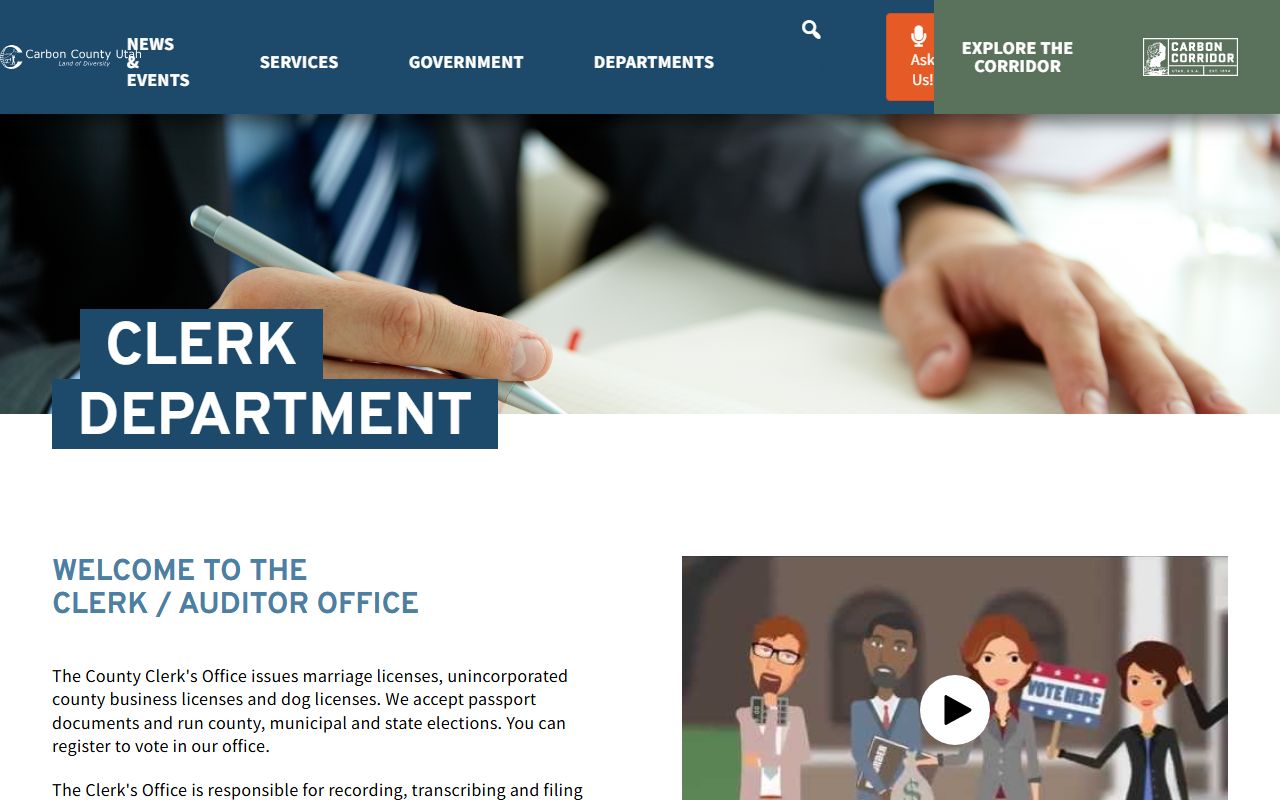
That clerk page helps when the obituary points to a family name, a marriage line, or a county residence but not the exact file. It gives the search a firm county starting point.
Carbon County residents who need a certified death copy usually turn to the Southeast Utah Health Department or the Utah Office of Vital Records. The county clerk notes that old records may also include early birth and death registers from 1898 through 1905, which can be useful when the death happened before statewide registration was fully settled. Those older files are not always easy to find, but they can be the bridge between a local story and a formal record.
Carbon County Obituary Archives
Older Carbon County obituary work often depends on the archive trail and the cemetery side of the search. The Utah State Archives death certificate index at archives.utah.gov/research/indexes/20842.htm covers Utah deaths from 1905 through 1967 and lets you check a name, year, and county before you order anything. That is useful when a family remembers only the rough date or the likely town. A quick index search can keep you from chasing the wrong county.
The Utah Cemetery and Burial Database is another strong tool because it can turn a name into a burial match, a cemetery name, or a grave location. That is especially helpful in Carbon County, where burial records may carry more detail than a short obituary. A cemetery clue can show the family line, the burial date, or the plot that ties a person to Price, Helper, or a smaller town nearby.
The image below comes from the Carbon County Recorder, which is the county source most useful when a death search turns toward property, estate, or burial plot clues.
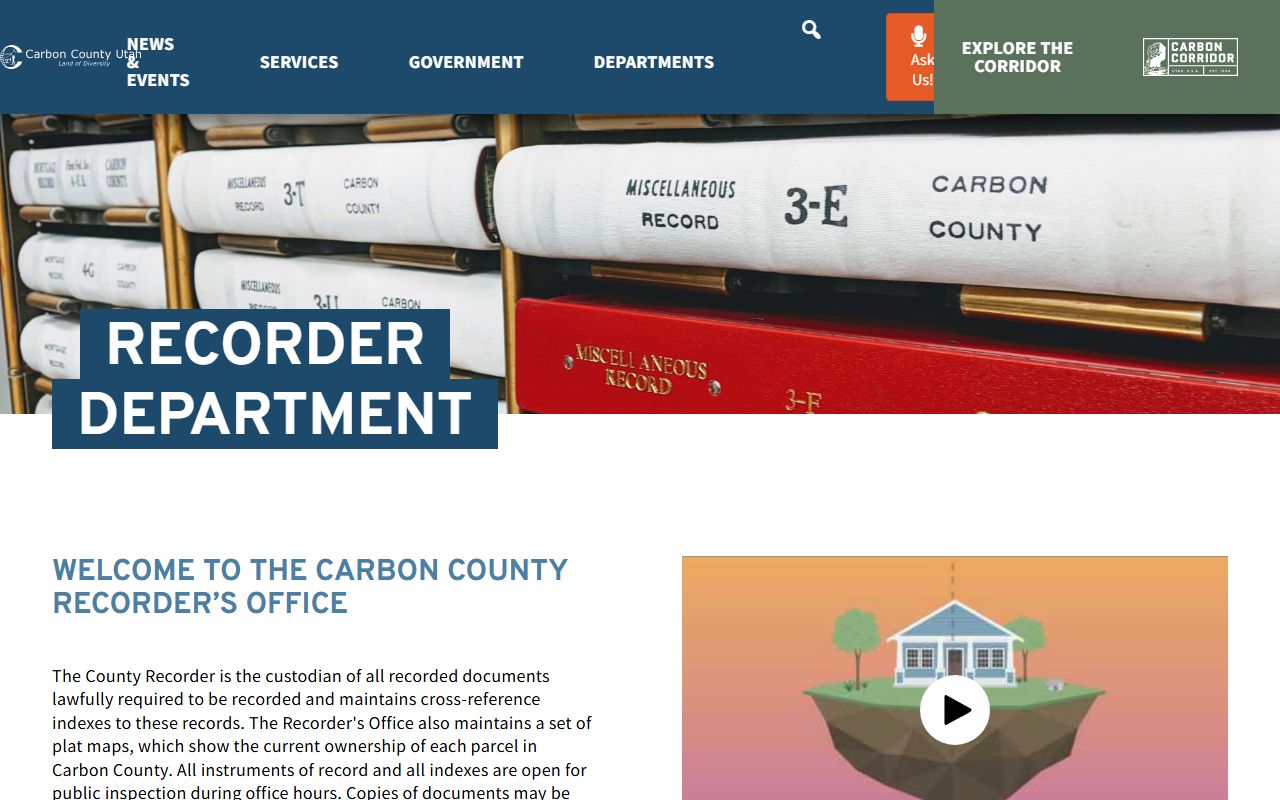
That recorder page is not a death office, but it can still reveal what happened to land or property after a death. In a mining county, those clues matter more often than people expect.
Note: A cemetery name or a year range usually makes the archive search much easier than a broad surname search.
Finding Carbon County Obituaries
Newspaper searches are still one of the fastest ways to find a Carbon County obituary because they capture the local details that official forms skip. Utah Digital Newspapers can surface death notices, funeral notices, and obituary items from Utah papers. That works well in Carbon County because coal camps, company towns, and rural communities often had their own paper trail. A notice may give you the funeral home, church, or cemetery even when the county file is thin.
For families who need the official certificate side, the Utah Office of Vital Records at vitalrecords.utah.gov is the statewide backup. It is useful when a county request is not enough or when the family wants the central record path before they mail anything in. The state history office at history.utah.gov can help tie burial and local history material together when the obituary leads into a family or town history search.
The Southwest Utah Public Health Department is part of the Carbon County record picture as well. The county may not sit in the same health district as every other Utah county, but the health route still matters when you need a certified copy and want to confirm the exact office before you order. That is often the cleanest way to keep the request moving.
- Full name of the deceased, including maiden names if needed
- Approximate death year or burial year
- Town, camp, or cemetery clue in Carbon County
- Spouse, parent, or child names that separate similar people
Those details make the newspaper search more precise and help when you compare the obituary to the burial record and the certificate record.
Public Access for Carbon County Obituaries
Carbon County obituary work follows Utah public-record rules like the rest of the state. Under GRAMA, many government records are open unless they are private, protected, or sealed. That means a newspaper obituary, a burial entry, and many county records can be inspected, even if some details inside those records are trimmed away. The public part is usually enough to keep the search moving.
That rule matters because obituary research often crosses from a public notice into a more formal record request. A family may find the notice in a paper, the burial in a cemetery database, and the certificate through the health office or the state system. Each source carries a different piece of the story. When the trail is thin, the public record rules still let you work with enough detail to connect the dots.
The CDC Utah vital records page is a useful backup when you want to confirm the statewide request framework before you order anything. It is not a substitute for the county or health office, but it can help you verify the basic steps before you send a request by mail.
For older Carbon County cases, the county clerk and the burial database often work together. A marriage record can confirm the family line, while the death index and burial record show the later event. That makes the obituary search stronger because each record supports the next one.
Carbon County Obituary Copy Requests
When you are ready to ask for a certified copy, the county and state paths both matter. Carbon County residents can use the Utah Office of Vital Records or the regional health route that serves the county. That is useful when the obituary points to Carbon County but the death happened elsewhere in Utah. The request still fits the same state system, so the county line does not block the search.
Keep the request plain. Use the full name, the approximate date, and any relationship clue that can help the office match the right file. A clean request is easier to process and less likely to come back asking for more information. If you already know the burial place or newspaper date, that can help too. The more exact the request, the better the response usually is.
If the county route does not resolve the question, the state office remains the next step. That layered approach is normal in Utah obituary work because the record trail often runs through more than one office before it lands on the right copy.
Note: Bring the smallest set of facts that still identifies the person. Simple requests are easier to process.
More Carbon County Research
Carbon County searches work best when you treat the clerk, the archive index, the burial database, and the newspaper collection as one path. The clerk gives you the family line. The health or state office gives you the certificate. The archive and burial tools fill in the gaps. That sequence is slower than a broad search, but it gives you a better match and fewer false leads.
If the first pass does not settle the question, search again with a smaller year range or a different family name. Obituaries often use nicknames, maiden names, or old household names that do not match the official file on the first try. A second pass through the same sources usually finds the missing piece once the date or surname is tighter.