
Cache County Obituary Records
Cache County obituary research works best when you treat Logan as the center of the search and then fan out to the county, state, and newspaper records around it. A short notice may give you only a name and a year, while a death certificate or burial file can finish the picture. That is why the best first pass usually includes the county clerk, Bear River Health, and the Logan library. Each one gives a different clue. Together, they can turn a thin obituary into a record trail that actually answers the family question.
Cache County Quick Facts
Cache County Obituary Sources
The Cache County Clerk page is the natural place to start when a family name is tied to Logan or another Cache County town. The clerk office is at 179 N Main Street in Logan, and the research notes that it keeps marriage records from 1887 forward. That record set does not replace a death notice, but it helps anchor a family line when the obituary uses a married name, a maiden name, or a short local reference. It is a clean starting point because the county seat and the record office sit in the same city.
The image below comes from the Cache County Clerk page, which is the first county record stop for many Logan obituary searches.
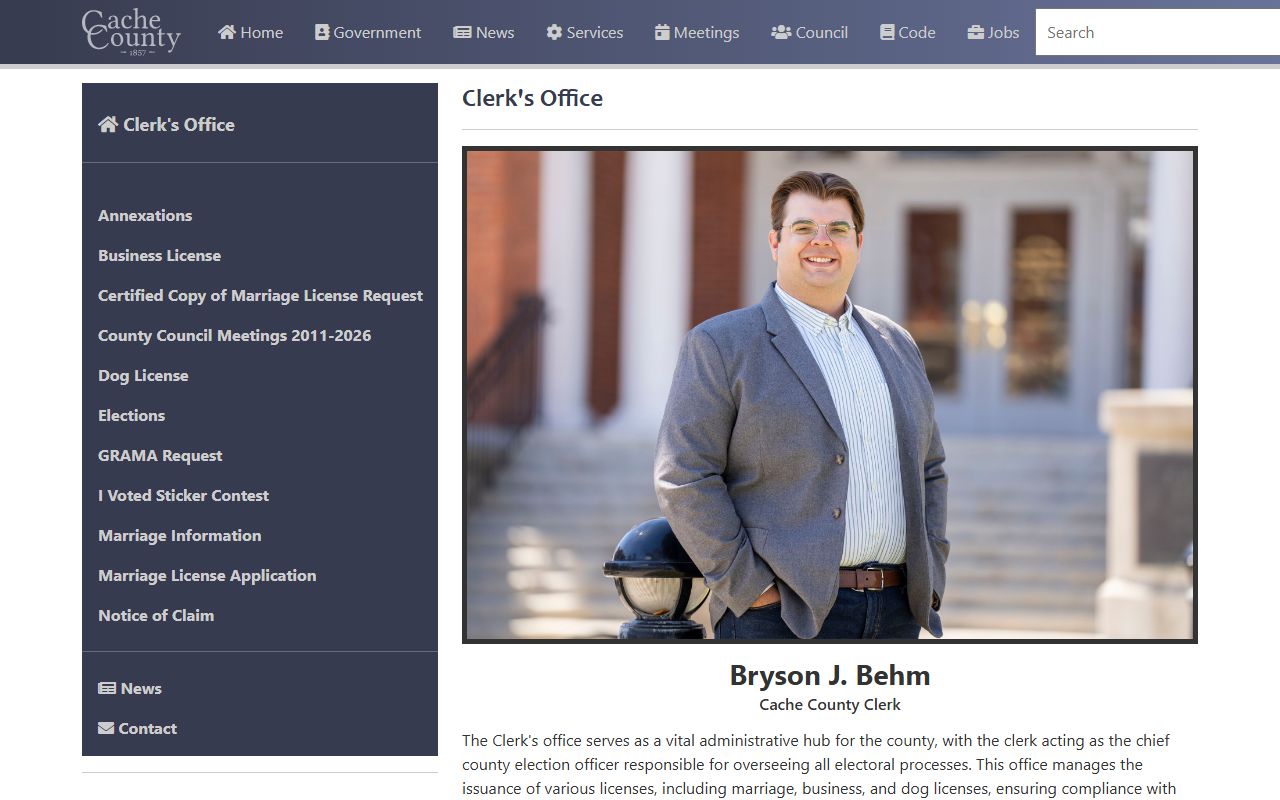
That county clerk page is useful when you need a family anchor before you move to death records or cemetery work. It gives the search a fixed place on the map.
Bear River Health is the county's death-certificate path. Visit Bear River Health Department vital records when you need a certified death copy for Cache County or another Utah event. The department serves Cache County residents through in-person, mail, and online options, and the county-level fee structure is $30 for the first copy and $10 for additional copies ordered at the same time. That matters when the obituary is only a lead and the family needs an official record.
Cache County Obituary Archives
Older Cache County obituary work usually turns on the county's early registers and the state indexes that fill the gaps after 1905. Cache County kept early birth and death registers from 1898 to 1905, which can be important when a family death predates the statewide certificate system. Those records are small, but they can point to the person you want, the place they died, or the family name that makes the next step easier.
The county recorder is not a death office, but it still matters in obituary research because estate and property clues often land there. The image below comes from the Cache County Recorder page, which is the right place to think about land transfers, burial plots, and inherited property after a death.
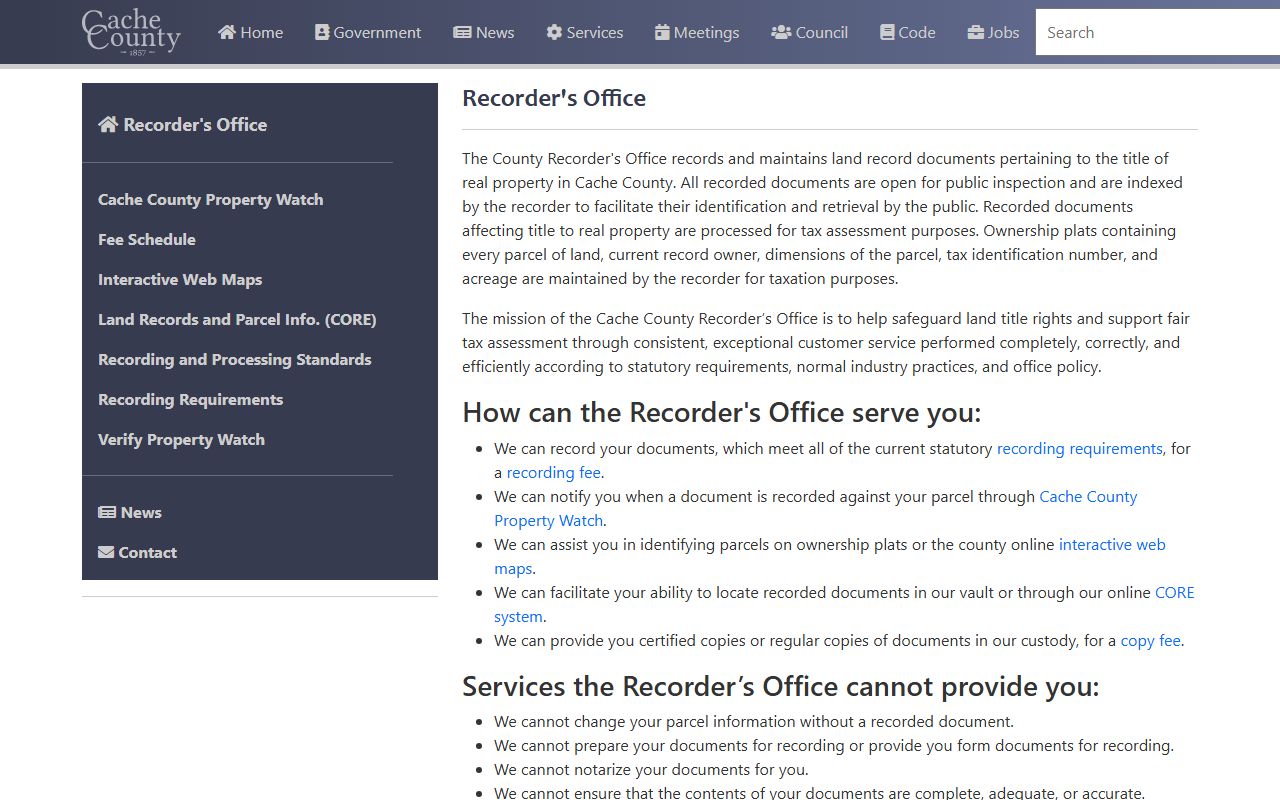
That kind of record can help explain what happened after the obituary ran. A deed or property note may reveal an heir, a home, or a family move that a notice never mentions.
For older and broader searches, the Utah State Archives death certificate index at archives.utah.gov/research/indexes/20842.htm gives a statewide path through death records from 1905 to 1967. Pair that with the Utah Cemetery and Burial Database and you can often move from a name to a burial place and then back to a county file.
Note: The archive trail is often easier to read once you already know the death year or burial site.
Finding Cache County Obituaries
Newspapers are still one of the best ways to find a Cache County obituary because they capture the small details that official forms skip. Utah Digital Newspapers can surface death notices, funeral notices, and local death items from Cache County papers. The search works best when you already have a name, a rough year, and one place clue. That keeps the result list narrow and makes it easier to spot the right article.
Logan City Library adds another layer to that search. Its local history collections include newspapers on microfilm, city directories, and genealogical resources, and it also provides access to Ancestry Library Edition. The image below comes from the Logan City Library page, which is one of the strongest local research tools in Cache County.
That library page matters because Logan is both the county seat and the place where many family searches start. When a notice is thin, the library can help fill the gap with a newspaper clip, a directory entry, or a surname match.
To keep a Cache County obituary search tight, gather a few basics first:
- Full name of the deceased, including maiden names if needed
- Approximate death year or burial year
- Town, ward, or cemetery clue in Cache County
- Spouse, parent, or child names that can separate similar people
Those details make the paper search faster and also help when you move between the newspaper, burial, and certificate records.
Public Access for Cache County Obituaries
Cache County obituary work is shaped by Utah's public-record rules, especially GRAMA. In practice, that means many government records are open to the public, but some parts can still be protected, private, or redacted. A newspaper obituary may be public, a burial record may be public, and a certificate copy may require a tighter request path. The rule is simple, but the record trail can still split across offices.
The state office at Utah Office of Vital Records is the backup when Bear River Health is not the right source or when a statewide request makes more sense. Utah also points researchers to the federal guidance on the CDC Utah vital records page, which confirms the state contact and the basic request framework for Utah records. That can help when you are checking an address or a request method before you order.
Most Cache County searches work best when you start with a public notice, then move to the official record. That keeps the search efficient and avoids ordering the wrong file.
Getting Cache County Obituary Copies
If you need a certified death record rather than a notice, Bear River Health is the main Cache County path. Requests can be made in person, by mail, or online through the state's SILVER system. The department asks for proper ID and proof of relationship when needed, which keeps the file tied to the right person. That is especially important when the obituary is a partial match or when the family needs a copy for a formal paper trail.
Mail requests are straightforward if you keep them plain. Send the completed form, a clear ID copy, proof of relationship if it applies, and payment by check or money order. If you are trying to match a death notice to a certified file, start with the exact name used in the obituary, then add the city or county if the search needs more focus. A clean request saves time on both sides.
For older Cache County cases, the county clerk and the state archive work together more often than people expect. A marriage record can confirm the family line, while the death index and burial database show the later event. That makes the obituary search more solid because each record supports the next one.
Note: Bring the smallest set of facts that still identifies the person. Simple requests are easier to process.
More Cache County Research Help
Cache County has enough local and state support to make obituary work practical even when the first search comes up short. Logan is the county seat, so the record trail is compact. That helps when a family needs to move from a name to a certificate without jumping across Utah. The clerk, health department, library, and archives all serve different parts of that trail.
If the first pass does not settle the question, search the newspaper again with a different year range and then check the burial side one more time. The result often appears after the second or third pass, not the first. That is normal for obituary work, especially when a name is common or the notice was brief. Cache County records are good enough to support that kind of careful search.