
Roy Obituary Records
Roy obituary research usually runs through Weber County, but the search still starts with the city. A local city page can give you the first clean clue, and the county system can then supply the record that proves the death. That path works well in Roy because the city is tied closely to Weber County records and to the Weber-Morgan Health Department. Start with the city recorder, then move to the county library, the death-certificate office, and the burial database until the trail lines up.
Roy Quick Facts
Roy Obituary Sources
The Roy City Recorder is the first local government page worth checking when a Roy obituary search begins with a residence or city name. The recorder office keeps city records and gives you a local anchor before you move out to county files. That is useful when a family remembers the street, the ward, or the neighborhood but not the exact record source. A clean city reference can narrow the search enough to make the county and state tools work faster.
Roy also relies on the Weber-Morgan Health Department for death certificates. The county service is based in Ogden, at 477 23rd Street, and it can issue certified copies for events anywhere in Utah. That matters when the obituary points to a Roy family but the death happened elsewhere. The county office is often the fastest route when the goal is an official copy, not just a printed notice.
The image below comes from the Weber-Morgan Health Department vital records page, which shows the office Roy residents use when they need a certified death record.
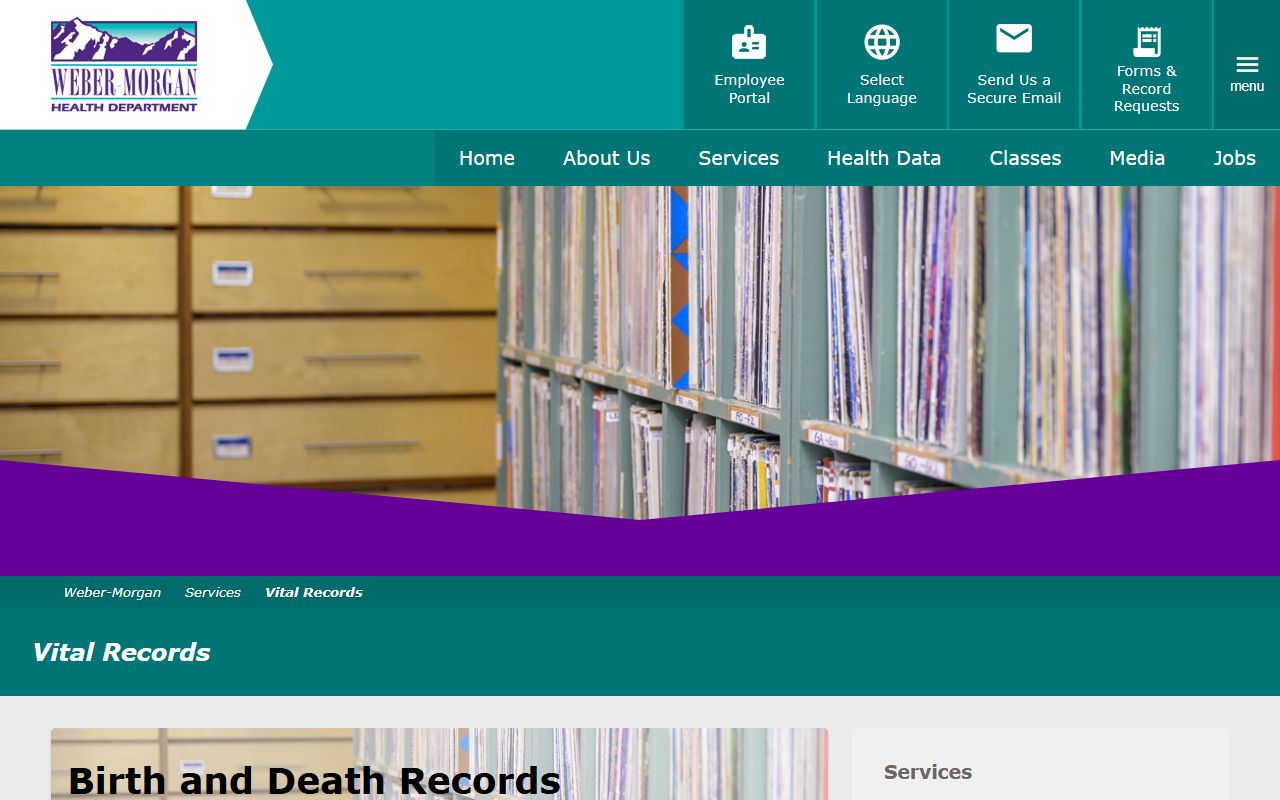
That county office is a strong starting point for Roy because it connects the city to the official certificate path without making the search feel remote.
Roy Obituary Records
The Weber County Library route is the best local research path when an obituary turns into a family history search. The main library system provides local history collections, newspapers, and genealogy resources that help you sort through people with the same surname. Those tools matter because a Roy death notice may appear in one place while a family address or burial note appears in another. A library search can also help you test spellings before you order a copy.
The image below comes from the Weber County Library page, which is the county research hub most likely to help with newspaper and genealogy leads tied to Roy.

If you know the family used a local cemetery, the burial database can help confirm the burial side of the search. If you only know the obituary was printed, the library can help you find the paper trail. Either way, the county collection gives you a better shot than a wide web search with no place clue.
Roy families can also use the county clerk record trail to keep family names straight when an obituary is thin. That is especially helpful if a notice gives a married name, a maiden name, or only a partial household clue.
Finding Roy Obituaries
Newspaper and state index tools are the fastest way to move past the city level. The Utah State Archives death certificate index at archives.utah.gov/research/indexes/20842.htm lets you check names, dates, and counties before you request a certificate. That is useful when you only have a rough year or a possible family name. It also helps you decide whether the death belongs in Weber County or somewhere else in Utah.
Utah Digital Newspapers is the next stop for printed notices. Roy families may appear in local death notices, funeral announcements, or short obituary items that were copied into the paper with very little detail. Those clips often carry the church, the funeral home, or a burial location. When a notice is brief, even one extra line can point you to the next record. That is why newspaper work and official record work should stay tied together.
The Utah Cemetery and Burial Database adds another layer. It can confirm burial places and sometimes show the cemetery or grave site when the obituary only gives a family name. That is especially helpful in Weber County, where a family may have lived in Roy but been buried in another nearby town. A good search usually starts with the name, then checks the burial and newspaper trail before moving to a formal certificate.
- Full name and any nickname
- Approximate death year or burial year
- Roy address, church, or ward clue
- Spouse, parent, or child names
- Whether you need a notice or a certified copy
Those details keep the search tight. They also help when the first search result is close but not right.
Roy Obituary Copies
Roy families use the Weber-Morgan Health Department when they need a certified death certificate. The county office can issue certificates for events anywhere in Utah, and it accepts in-person and mail requests. That makes it the right place when an obituary has already given you the person and the date, but you still need an official copy for family records or follow-up paperwork. The county route is usually simpler than guessing at a statewide office first.
The county also supports online ordering through SILVER, which can help if you do not want to visit in person. Mail requests still work, but they need a completed form, identification, and proof of relationship when required. Death certificate fees are $30 for the first copy and $10 for each additional copy ordered at the same time. That is the kind of detail worth knowing before you place the order, because a clean request is usually a fast request.
Note: If the county copy is not enough, the Utah Office of Vital Records at vitalrecords.utah.gov is the statewide backup for Utah vital records requests.
Public Access in Roy
Roy obituary records follow Utah public-record rules just like the rest of the state. Under GRAMA, many government records are open unless they are private, protected, or sealed. That means the obituary itself, a burial entry, or a county index may be easy to inspect even when a related document is limited. The record trail is public in many places, but not every detail inside the trail is public.
That balance is why a Roy search works best when you move from one source to the next. A newspaper notice can point to a burial place. A burial record can point to a family line. A state certificate index can confirm the county. The Office of Vital Records is the formal backup when you need the certificate side, but the city and county sources still do the heavy lifting early in the search.
The city recorder, county library, and burial database are especially helpful when a death notice is thin. They give you place, family, and context. If one source is vague, the next one may not be. That is the real value of working the trail in order instead of jumping straight to the final request.
More Roy Research Help
Roy is a strong city for obituary research because the county tools are close and the library system is strong. The county library's local history resources can handle family history questions that go beyond a single notice. If the name is common, the local directory and newspaper trail can save you from ordering the wrong certificate.
The city recorder can help anchor the place name. The county health department can confirm the death record. The newspaper archive and burial database can add the proof you need when the notice is incomplete. That mix is usually enough to move from a city name to a record you can trust. Roy residents do not have to guess their way through the search when the county and state sources are this close together.
Roy searches work best when the first clue stays small. Use one name, one year, and one place. Then check the city, county, and state records in that order. That approach is slower than a broad web search, but it produces better matches and fewer dead ends.